Ashkan Golshani
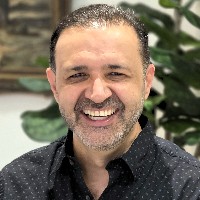
Professor
Faculty of Science
Department of Biology
Clusters:
Health
Ottawa, Ontario
ashkan.golshani@carleton.ca
Mobile:
(416) 894-7777
Media Relations
Bio/Research
Golshani is interested in identification of novel gene/protein functions in model microbial organisms such as yeast, Saccharomyces cerevisiae and E. coli. This area of biology is often called functional genomics/proteomics, which serves as a branch of systems molecular biology. The two main areas...
Click to Expand >>
Click to Expand >>
Bio/Research
Golshani is interested in identification of novel gene/protein functions in model microbial organisms such as yeast, Saccharomyces cerevisiae and E. coli. This area of biology is often called functional genomics/proteomics, which serves as a branch of systems molecular biology. The two main areas that he targets are translation (protein synthesis) control and DNA damage repair, both of which have implications in important human conditions including progression and onset of cancer. He focuses on pure research with some implication on the applied fields such as development of novel therapeutics. He uses advanced molecular biology, molecular genetics and systems biology techniques and approaches for our research.
He is also interested in chemical-genomics of various natural bioactive compounds. There are 1,000s of compounds found in nature, which can perform various interesting functions in a cell. However, their biological implications at the molecular level have not been studied or realized. He performs systematic approaches to investigate the target site of some of these naturally occurring compounds.
He is also vigorously involved in computational prediction and design of protein-protein interactions (PPIs). He uses computational approaches to design peptides that can bind and interfere with target PPIs and/or proteins. These peptides can be used to neutralize and/or detect specific targets and hence can be utilized in drug development and diagnostic approaches.
Click to Shrink <<
He is also interested in chemical-genomics of various natural bioactive compounds. There are 1,000s of compounds found in nature, which can perform various interesting functions in a cell. However, their biological implications at the molecular level have not been studied or realized. He performs systematic approaches to investigate the target site of some of these naturally occurring compounds.
He is also vigorously involved in computational prediction and design of protein-protein interactions (PPIs). He uses computational approaches to design peptides that can bind and interfere with target PPIs and/or proteins. These peptides can be used to neutralize and/or detect specific targets and hence can be utilized in drug development and diagnostic approaches.
Click to Shrink <<