Elliott Skierszkan
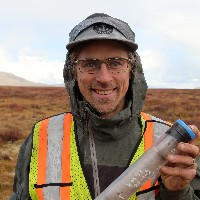
Professor Faculty of Science Department of Earth Sciences Clusters: Climate change Ottawa, Ontario elliottskierszkan@CUNET.carleton.ca
Languages
French
Bio/Research
Skierszkan's research goal is to improve our understanding of contaminants in water to guide better water use and management. he combines techniques in aqueous and isotope geochemistry, mineralogy, and hydrogeology to understand the processes driving the release of potentially hazardous metals an...
Click to Expand >>
Click to Expand >>
Bio/Research
Skierszkan's research goal is to improve our understanding of contaminants in water to guide better water use and management. he combines techniques in aqueous and isotope geochemistry, mineralogy, and hydrogeology to understand the processes driving the release of potentially hazardous metals and metalloids into water resources.
Current research themes include:
Impacts of climate change and thawing permafrost on northern water resources;
Hydrogeology and geochemistry of mine wastes; and
Hydrogeochemical drivers of geogenic contaminants in groundwater.
His projects typically involve a field-based component and collaborations with partners from academia, government, private industry, and First Nations. These collaborations and land-based activities ensure that knowledge produced through research contributes to improved societal outcomes. Where needed, he conducts laboratory experiments to constrain the fate of contaminants in aqueous systems.
Click to Shrink <<
Current research themes include:
Impacts of climate change and thawing permafrost on northern water resources;
Hydrogeology and geochemistry of mine wastes; and
Hydrogeochemical drivers of geogenic contaminants in groundwater.
His projects typically involve a field-based component and collaborations with partners from academia, government, private industry, and First Nations. These collaborations and land-based activities ensure that knowledge produced through research contributes to improved societal outcomes. Where needed, he conducts laboratory experiments to constrain the fate of contaminants in aqueous systems.
Click to Shrink <<